I. Introduction
As graduation approached, I began preparing my CV and portfolio in order to apply for jobs. In terms of career direction, I am currently most interested in key animation and storyboard artist positions.
Before officially starting the process, I learned from lectures and also looked through online posts and professional portfolio examples. Through this research, I gradually realised that different roles require different ways of presenting portfolio work. Because of this, I needed to adjust both the content and structure of my portfolio depending on the position I was applying for.
II. Developing CV
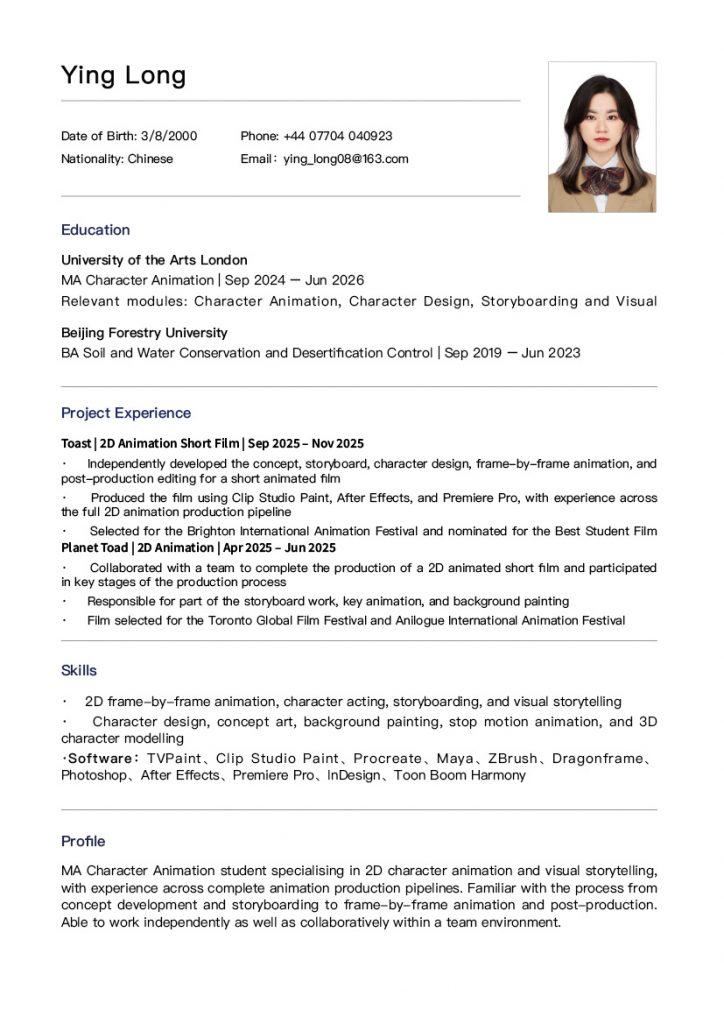
For my CV, I wanted it to feel clear while still helping recruiters quickly understand who I am and what kind of role I am looking for.
I included the necessary information without making it overly complicated. I started with basic personal information and contact details, followed by my undergraduate and postgraduate educational background.
After that, I introduced the two main projects I have worked on so far and clearly explained my responsibilities within each project. To better demonstrate the quality of the work, I also included information about film festival selections related to the projects.
I then listed my skills and software knowledge. Finally, I added a short personal statement to briefly explain my career interests and the positions I hope to apply for.
III. Building Portfolio and Showreel
For my portfolio, I prepared both a static PDF version and a dynamic showreel.
Instead of placing images separately inside folders, I organised them into a complete PDF document. I felt this would make the work easier to view and present a more professional impression overall.
My portfolio is mainly targeted towards storyboard artist positions, so the main content consists of storyboard and layout work I created over the past three years. These projects form the core of the portfolio. At the end, I also included some character design and background painting work as additional material.
To make the portfolio easier to understand, I added short labels and project titles at the bottom of each page so viewers could quickly recognise the context, style, and purpose of each piece. I wanted the overall presentation to feel more organised and professional.
When preparing my showreel, I realised that it is important not to include every piece of work, but instead to carefully select the strongest material. Rather than focusing on length, the quality of the work is much more important.
In this showreel, I mainly wanted to demonstrate my abilities related to key animation. In addition to shot labels, I included comparisons between the rough key animation stage and the final rendered result for some scenes in order to show part of the production process and my animation thinking. At the end, I also included several exercises such as lip sync, mood change walk cycles, and quadruped walk animation.
IV. Reflection
Through my projects, I realised that one of my strengths is visual storytelling. I enjoy thinking about camera language, pacing, composition, and emotional atmosphere when planning scenes and sequences. I am particularly interested in creating emotional and atmospheric moments through animation, which is something I hope to continue developing in future projects.
At the moment, one of my biggest weaknesses is that I have not participated in enough projects yet, which means I still do not have enough material in my portfolio. I hope that after completing my graduation film, I will be able to include part of that work in my portfolio to make it more complete and better reflect my skills and creative direction.
Showreel: https://drive.google.com/file/d/1BDKPErIlhf_wJPhwa8Wl7_MHIy8vnCSX/view?usp=drive_link
Leave a Reply