
The second year: Felix Cheng
For this project, my role was to assist Felix in the production of her animated short film. In our initial email correspondence, she introduced me to the story premise—a young boy overcoming ridicule and struggles to buy the doll he longs for. When we later met in person, Felix presented her animatic, which provided a clearer and more dynamic understanding of the narrative.
Considering that our own coursework deadlines were approaching, Felix assigned us a manageable workload to ensure that our contributions wouldn’t interfere with our personal projects.
Task 1: Turnaround Design
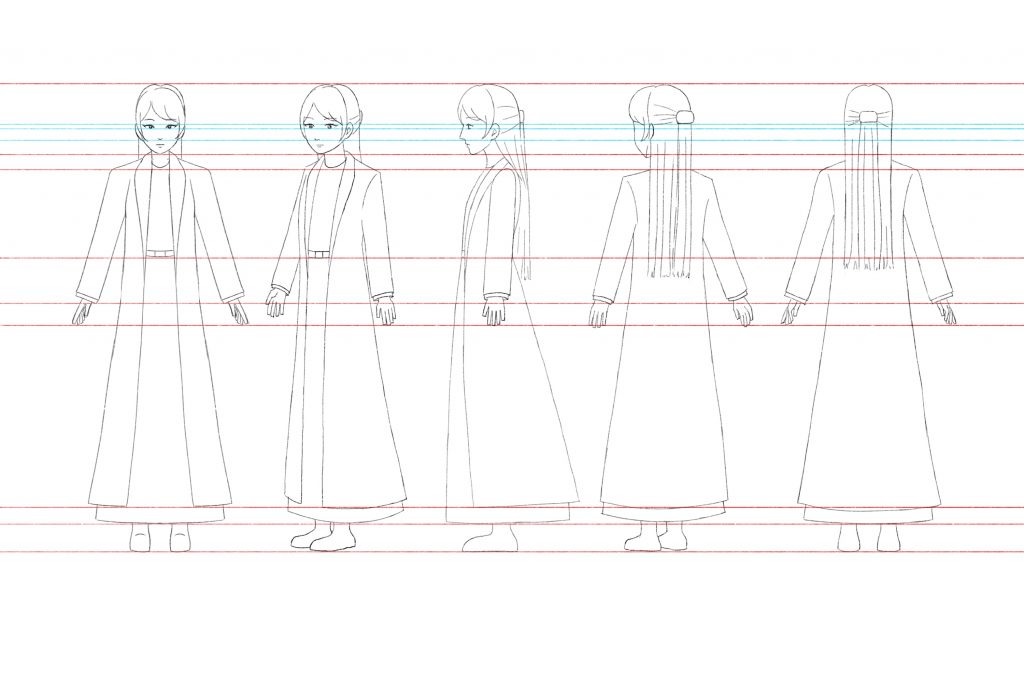
The first task I received was to create the turnaround for the mother character. Felix provided me with a front-facing character design, and based on her requirements, I illustrated the ¾ front view, side view, ¾ back view, and back view.
This task wasn’t particularly challenging, as I had already practiced turnaround design in my character design course last semester. However, attention to detail was crucial—maintaining consistency in the character’s proportions across all angles, ensuring elements like the head, eyes, shoulders, arms, and knees remained aligned to avoid distortions.
Task 2: Keyframe Background Illustration
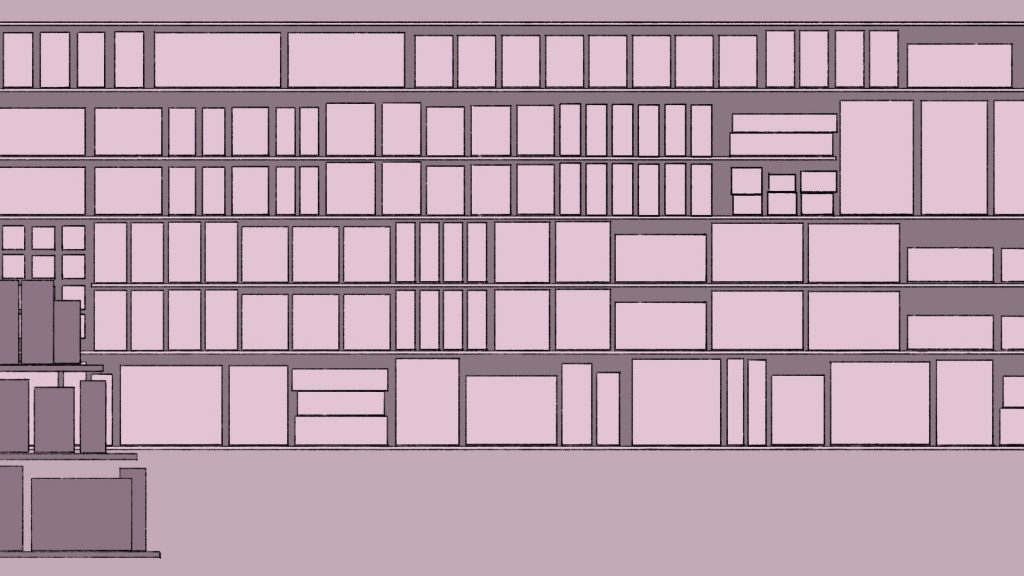
My second task was to illustrate a keyframe background—a toy store interior where the protagonist and his mother stand in front of a doll display shelf. Felix sent me a few sample images as style references to guide my approach.
After understanding the setting, I conducted further research online, gathering images of toy store shelves to use as references. The background itself wasn’t overly complex or highly detailed, but it involved a lot of repetitive elements, requiring patience in rendering similar objects multiple times.
Reflection
So far, I have completed two tasks in this project, both of which were manageable in difficulty and workload. I was able to deliver them on time and received positive feedback from Felix.
This project was also our first collaboration with second-year students, allowing us to observe their workflow and production process firsthand. One of the most valuable lessons I took away from this experience is the importance of communication in collaboration. When working as part of a team, it is essential to clarify uncertainties, ask questions whenever something is unclear, and articulate expectations clearly. Effective communication not only improves efficiency but also ensures the final outcome aligns with the project vision. Moving forward, I will make a conscious effort to communicate more proactively, ensuring a smoother and more productive collaboration process.
Leave a Reply